
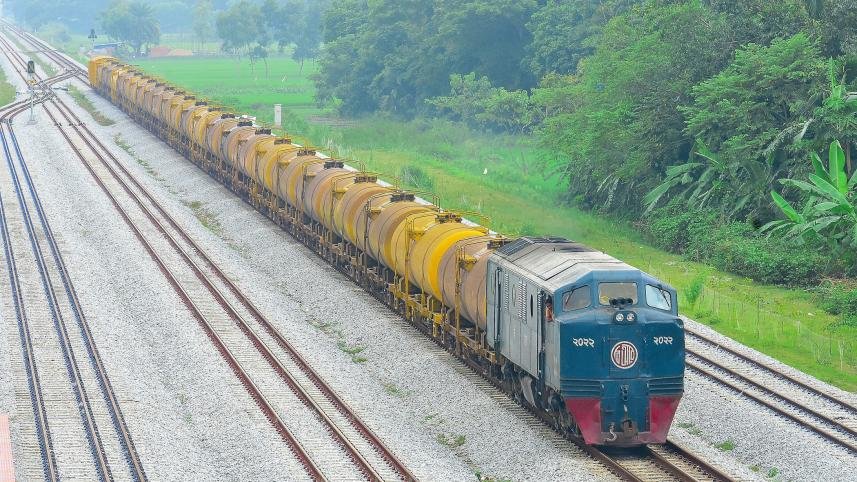
Bangladesh does not need to sell its tracks or stations. It needs to use them more intelligently.’ PHOTO: SOBUZ KHAN/WIKIMEDIA COMMONS
Bangladesh’s export economy now moves faster than its railways can carry it. Factories, ports and private logistics firms have modernised to meet global demand. However, rail freight remains stuck in a system designed for a smaller, slower economy. Container trains bound for Chattogram are delayed, cancelled or pushed aside for passenger services. Inland container depots (ICDs) clog up. Highways choke. Ports feel the strain.
In an earlier article, I argued that ICDs cannot become engines of export growth unless freight trains are reliable, predictable and commercially driven. That warning has only grown more urgent. Bangladesh Railway is expected to support a rapidly expanding export economy while operating under rules that prioritise passenger trains, tolerate chronic locomotive shortages and treat freight as expendable. A container train booked for tonight must not vanish because a passenger locomotive failed elsewhere or the train was politically prioritised. Yet, freight guarantees are impossible under the monopoly system, as Bangladesh Railway lacks dedicated locomotives for freights and prioritises passengers over cargo.
Google News LinkFor all latest news, follow The Daily Star’s Google News channel.
This is why the debate must move beyond procurement delays and management shortcomings to a deeper reform: opening Bangladesh’s railway tracks to private freight train operators.
There is no compelling reason why Bangladeshi logistics firms, exporters or foreign investors should not be allowed to run their freight trains—using their own locomotives, wagons and crews—on tracks owned and maintained by Bangladesh Railway. This would operate under transparent, regulated access agreements. The railway would retain ownership of infrastructure, control safety and manage traffic. What it would give up is its monopoly over freight operations.
This may sound radical, but globally, it is routine. India opened container train operations to private companies nearly two decades ago. Today, multiple firms run their own trains on Indian Railways’ tracks, paying access charges while investing billions in wagons, terminals and networks. Across Europe, public and private freight operators compete on national rail systems. In the United Kingdom, all freight trains are privately operated even though the tracks remain state-owned.
Russia and parts of China allow private ownership of locomotives and wagons on public corridors. Even Pakistan—once as closed as Bangladesh—now permits private freight trains in exchange for track access fees.
None of these countries privatised their railways. They separated infrastructure from operations.