The streets of Mohakhali buzz with the usual chaos — tea stalls steaming, rickshaws weaving, workers rushing past. Yet, beneath the ordinary hum, a quiet confusion lingers. Citizens talk about a referendum, but few understand its purpose, the questions it poses, or what a “Yes” or “No” vote will mean for the country’s future.
Shanto Ahmed Ratan, a tea seller, shrugs: “I hear there will be a referendum along with the vote. But I don’t know how it will work, what I’m supposed to vote for, or what happens if I vote Yes or No.”
His uncertainty is widely shared — not only among low-income workers, but across social classes — even as the interim government mounts an unusually forceful campaign urging voters to choose one side.
The referendum is being held to seek public approval for implementing reform proposals enshrined in the July National Charter. Yet, weeks before polling day, confusion rather than clarity dominates public understanding.
The interim government has left no room for ambiguity about its own preference. Its messaging — across speeches, videos, posters and social media — is unequivocal: the nation should vote “Yes”.
That position has triggered a growing debate over whether a government entrusted with overseeing a neutral electoral process should actively campaign for a particular outcome in a referendum.
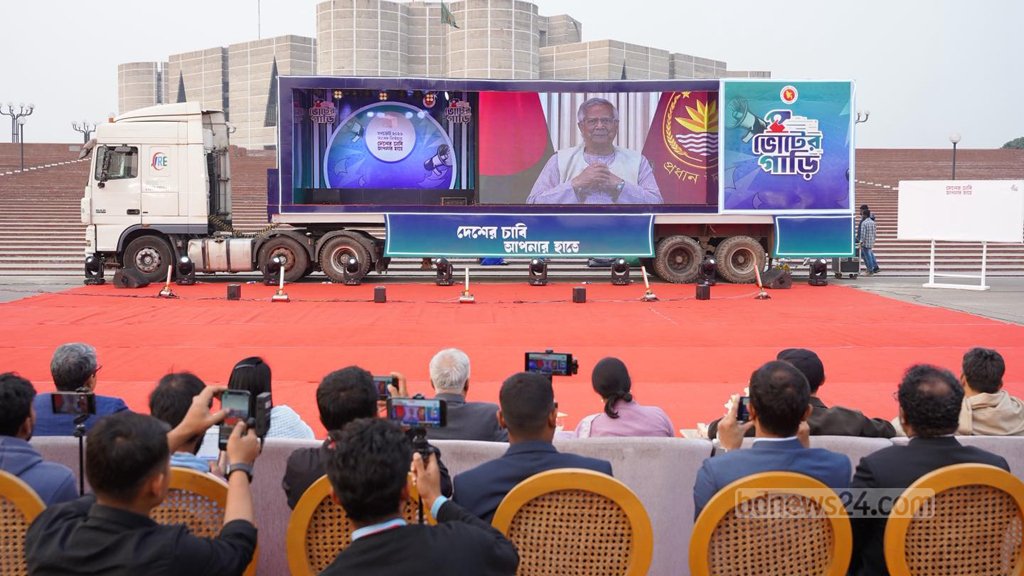
The debate intensified on Monday evening when Chief Advisor Muhammad Yunus addressed the nation in a video message, explicitly urging voters to support the “Yes” option.
“The key to building a new Bangladesh is now in your hands,” he said. “Stamp ‘Yes’ to open the door to a new Bangladesh. Vote ‘Yes’ yourself, encourage everyone you know to do the same, and bring them to the polling centres. Change the country.”
Senior lawyer Shahdeen Malik criticised the campaign, saying the government cannot lawfully advocate for a specific choice in a referendum.
Former secretary AKM Abdul Awal Majumder added that previous governments encouraged participation but did not direct voters toward “Yes” or “No”.